
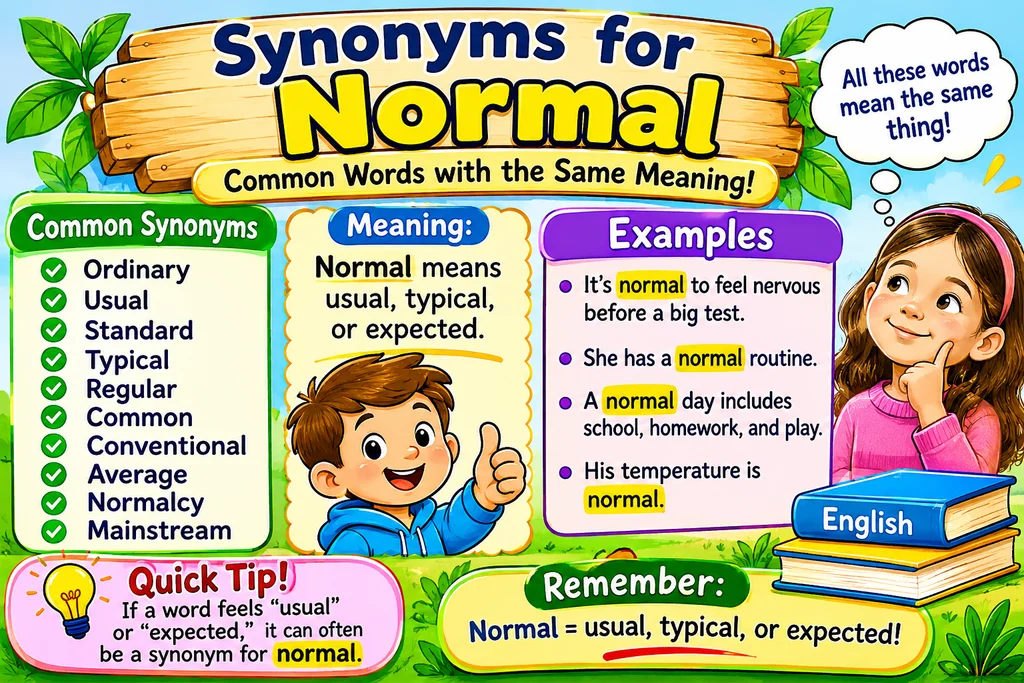
Describing everything as normal can make your writing repetitive, especially when discussing everyday routines, typical behavior, or situations that follow an expected pattern. Choosing a more precise word helps readers understand exactly what you mean.
Normal generally describes something usual, ordinary, expected, or consistent with an established standard. Depending on the context, useful synonyms include usual, typical, ordinary, common, regular, standard, routine, conventional, and customary. However, these alternatives have important differences. Typical describes something representative of a particular group, customary refers to an established practice, and ordinary suggests something unremarkable or not special.
For example, a routine task is performed regularly, while a common occurrence happens frequently. Whether you’re improving an essay, refining an article, or expanding your everyday vocabulary, these 50+ synonyms for normal will help you express each meaning more accurately.

Ordinary
Meaning:
Ordinary means not special or different from most others.
Examples:
- It was an ordinary morning — coffee, traffic, and emails.
- It was an ordinary Tuesday with nothing special happening.
Usual
Meaning:
Usual means what happens most of the time.
Examples:
- She took her usual seat by the window.
- He ordered his usual breakfast at the diner.
Regular
Meaning:
Regular means happening often, in a steady pattern.
Examples:
- He is a regular customer at the corner bakery.
- She visits her regular hairdresser every single month.
Everyday
Meaning:
Everyday means ordinary and part of daily life.
Examples:
- These are my everyday shoes, nothing fancy.
- He wore his everyday jacket to the game.
Common
Meaning:
Common means found or happening in many places.
Examples:
- Feeling nervous before an interview is completely common.
- It is common to feel tired after long flights.
Typical
Meaning:
Typical means showing the usual qualities of a type or group.
Examples:
- A typical weekend for us means movies and takeout.
- A typical day starts with a strong coffee.
Familiar
Meaning:
Familiar means well known because you have seen it before.
Examples:
- The familiar smell of rain filled the street.
- The familiar song played on the old radio.
Routine
Meaning:
Routine means done as part of a regular procedure.
Examples:
- The dentist said it was just a routine checkup.
- She followed her routine workout at the gym.
Habitual
Meaning:
Habitual means done regularly, almost without thinking.
Examples:
- His habitual morning run starts at six sharp.
- Biting his nails is a habitual nervous habit for him.
Expected
Meaning:
Expected means thought likely to happen.
Examples:
- The expected delivery arrived right on time.
- The expected heavy rain ruined our weekend picnic plans.
Standard
Meaning:
Standard means accepted as the normal level of quality or behavior.
Examples:
- The hotel room met every standard of cleanliness.
- They followed the standard recipe for the cake.
Conventional
Meaning:
Conventional means following what is generally done or believed.
Examples:
- She chose a conventional career in accounting.
- He took a conventional approach to the problem.
Traditional
Meaning:
Traditional means following long-established customs.
Examples:
- We spent Christmas the traditional way, at home.
- They held a traditional wedding in the countryside.
Customary
Meaning:
Customary means usual for a particular person or situation.
Examples:
- He gave his customary nod before leaving.
- She offered her customary smile to the guests.
Mainstream
Meaning:
Mainstream means accepted by most people, not extreme.
Examples:
- The film appealed to mainstream audiences.
- The catchy song became a mainstream hit almost overnight.
Orthodox
Meaning:
Orthodox means following established rules or beliefs strictly.
Examples:
- His teaching methods are fairly orthodox.
- The wise old doctor gave orthodox advice about rest.
Established
Meaning:
Established means accepted and recognized over a long time.
Examples:
- This is an established practice in the industry.
- It is an established rule in our house.
Accepted
Meaning:
Accepted means generally believed or approved by most people.
Examples:
- It is the accepted view among most scientists.
- The accepted final answer surprised the whole class.
Normative
Meaning:
Normative means relating to what is considered normal or right.
Examples:
- The study questions normative ideas about work hours.
- Such strictly normative behavior is rare among rebellious teenagers.
Classic
Meaning:
Classic means a typical example of its kind.
Examples:
- It is a classic case of supply and demand.
- The black dress is a classic wardrobe choice.
Plain
Meaning:
Plain means simple, without decoration or anything extra.
Examples:
- She wore a plain white shirt to the interview.
- He served simple plain toast for breakfast today.
Simple
Meaning:
Simple means easy to understand, not complicated.
Examples:
- The instructions were simple enough for anyone to follow.
- She gave a simple answer to the question.
Average
Meaning:
Average means not high or low, right in the middle.
Examples:
- His grades were average, but his effort was huge.
- The average summer temperature rose sharply this year.
Moderate
Meaning:
Moderate means neither too much nor too little.
Examples:
- We expect moderate rainfall this weekend.
- He took a moderate stance in the debate.
Mediocre
Meaning:
Mediocre means of only average quality, slightly disappointing.
Examples:
- The movie was mediocre — watchable, but forgettable.
- The mediocre overpriced meal disappointed the hungry guests.
Passable
Meaning:
Passable means just good enough to be accepted.
Examples:
- Her French is passable for ordering food on holiday.
- His home cooking is passable but never truly impressive.
Unremarkable
Meaning:
Unremarkable means not interesting enough to be noticed.
Examples:
- It was an unremarkable town, but he loved it there.
- They stayed in an unremarkable roadside hotel downtown.
Unexceptional
Meaning:
Unexceptional means not better or different than usual.
Examples:
- The service was unexceptional, yet reliable.
- The dull unexceptional lecture put many students to sleep.
Undistinguished
Meaning:
Undistinguished means plain, without special qualities.
Examples:
- He had a long, undistinguished career in sales.
- He led a quiet undistinguished but honest working life.
Mundane
Meaning:
Mundane means dull and ordinary, like everyday life.
Examples:
- Even mundane chores feel easier with music on.
- She completed the boring mundane paperwork very quickly.
Commonplace
Meaning:
Commonplace means ordinary, with nothing unusual about it.
Examples:
- Smartphones are commonplace in every classroom now.
- Traffic jams are commonplace in big crowded cities.
Vanilla
Meaning:
Vanilla means plain or basic, with no special features.
Examples:
- He picked a vanilla phone case instead of a flashy one.
- She chose a vanilla design for the website.
Generic
Meaning:
Generic means not special, made for general use.
Examples:
- The store brand is just a generic version of the same cereal.
- They bought cheap generic medicine at the local pharmacy.
Stock
Meaning:
Stock means standard, not customized or changed.
Examples:
- The car came with stock wheels and seats.
- The new laptop came with stock memory already installed.
Garden-variety
Meaning:
Garden-variety means ordinary, the most common kind.
Examples:
- It was just a garden-variety cold, nothing serious.
- It was just a garden-variety flu, nothing any worse.
Natural
Meaning:
Natural means as expected in nature, not forced.
Examples:
- Feeling tired after a long shift is completely natural.
- It is natural to miss old friends sometimes.
Predictable
Meaning:
Predictable means happening the way you would expect.
Examples:
- The movie had a predictable ending.
- The film’s big plot twist was entirely predictable.
Sane
Meaning:
Sane means reasonable and mentally healthy.
Examples:
- After a week off, she finally felt sane again.
- After the nap, he felt sane and refreshed.
Sound
Meaning:
Sound means sensible and reliable.
Examples:
- That is a sound plan for the weekend trip.
- She made a sound investment in the business.
Rational
Meaning:
Rational means based on reason rather than emotion.
Examples:
- Let us make a rational decision, not a rushed one.
- They had a calm rational talk about money matters.
Reasonable
Meaning:
Reasonable means fair and sensible.
Examples:
- They reached a reasonable agreement in an hour.
- The asking price seemed reasonable for the high quality.
Balanced
Meaning:
Balanced means steady, with nothing in excess.
Examples:
- A balanced diet keeps your energy stable all day.
- He maintains a healthy balanced schedule every single week.
Stable
Meaning:
Stable means not changing suddenly, secure and firm.
Examples:
- He finally found a stable job near home.
- The injured patient is in stable condition right now.
Steady
Meaning:
Steady means continuing evenly, without sudden change.
Examples:
- She made steady progress every single week.
- She kept a steady pace during the race.
Consistent
Meaning:
Consistent means always the same, dependable over time.
Examples:
- Consistent effort beats occasional brilliance.
- Consistent daily practice improved his guitar skills greatly.
Uniform
Meaning:
Uniform means the same everywhere, with no variation.
Examples:
- The walls had a uniform coat of white paint.
- The tired soldiers marched in neat uniform lines.
Orderly
Meaning:
Orderly means neat and well organized.
Examples:
- The files were kept in orderly rows on the shelf.
- The long orderly queue moved forward very slowly.
Prevalent
Meaning:
Prevalent means widespread in a particular area or group.
Examples:
- This opinion is prevalent among young voters.
- This fashion trend is prevalent in crowded urban areas.
Widespread
Meaning:
Widespread means found or happening over a large area.
Examples:
- Widespread rain is forecast for the whole region.
- Widespread heavy flooding affected several small riverside towns.
Prototypical
Meaning:
Prototypical means a perfect example of a type.
Examples:
- He is the prototypical college athlete — tall and driven.
- She is the prototypical team leader everyone admires.
When to Use Which
Picking the right synonym for normal is all about context. In formal writing — reports, essays, academic work — lean on standard, conventional, orthodox, or normative; they sound precise and professional. In casual chat, regular, usual, and everyday feel natural and friendly. For essays and articles, typical, customary, and prevalent add a thoughtful, analytical tone.
For sensitive or emotional moments, choose carefully. Calling a person’s feelings “normal” can sound dismissive; natural or expected feel kinder (“It is natural to feel upset”). And when you mean “not exciting,” be honest with words like unremarkable or mundane instead of hiding behind a vague “normal.”

45+Synonyms for Obvious: Find a More Precise Word
Frequently Asked Questions
What is the best synonym for normal?
There is no single best one — it depends on context. Ordinary works for everyday things, typical fits what is expected, and standard suits formal writing. Start with these three and you will rarely go wrong.
What is a formal synonym for normal?
Standard, conventional, orthodox, and normative are all strong formal choices. They appear often in academic papers, business reports, and professional documents where “normal” would sound too casual.
What is the opposite of normal?
Common antonyms include abnormal, unusual, extraordinary, exceptional, and irregular. Knowing the opposites also helps you understand exactly which shade of “normal” you mean in the first place.
Is it rude to call someone “normal”?
It can be, especially in medical or mental-health contexts, where it implies everyone else is “abnormal.” Kinder alternatives are typical, expected, or simply describing the situation directly instead of labeling the person.
What is a casual synonym for normal?
Regular, usual, and everyday are perfect for relaxed conversation. “Just a regular day” or “my usual order” sound far more natural than repeating “normal” in everyday speech.
Is “average” the same as “normal”?
Not quite. Average refers to the middle of a range — a mathematical idea — while normal refers to what is expected or typical. An average test score and a normal test score overlap, but they are not identical.
Conclusion
“Normal” is a useful word, but it is also a lazy one. Now you have 50 words similar to normal in your toolbox — from ordinary and typical to standard and balanced — and each one says something “normal” never could. Try swapping it out in your next email, essay, or conversation and notice how much clearer you sound. Small vocabulary upgrades like this compound fast.
Author

Daniel Brooks is a language enthusiast and contributing writer at SynonymCore. He writes about word meanings, usage, and the subtle differences between similar words.